Guide · Updated October 19, 2026
How to Make a Family Cookbook from Old Recipe Cards (Step by Step)
A box of handwritten recipe cards is one of the few places where a family's everyday history is written down: the cursive, the margin notes, the butter stains. Turning those cards into a family cookbook keeps the recipes usable and keeps the handwriting, and it gives every branch of the family a copy. This guide walks through the whole process, with free do-it-yourself options at every step.
Step 1: Gather the cards
Recipe cards tend to be scattered: a tin at one aunt's house, a binder at another, a few cards tucked inside an old cookbook. Before you photograph anything, ask around. A short message works well:
“I'm putting together a family cookbook from Grandma's recipe cards. If you have any of her cards (or your own favorites), could you send me a photo of the front and back by the end of the month?”
For each card, write down three things while people still remember them:
- whose handwriting it is,
- who it came from (cards often say “Aunt Ruth's” or “from Mrs. Campbell”),
- and who has the original now.
Step 2: Photograph or scan each card
A phone camera is good enough for most cards. A few habits make a big difference:
- Lay the card flat on a plain, dark surface and shoot from directly above, so the lines aren't skewed.
- Use soft daylight from a window. Avoid the flash, which washes out pencil and creates glare on glossy cards.
- Fill the frame with the card and keep it in focus; tap the screen on the writing before you shoot.
- Photograph the back as well. Dates, names and “double this for Christmas” notes often hide there.
- For very faint pencil, a flatbed scanner at 600 dpi usually captures more detail than a phone.
Keep the original, unedited photos in one folder and name them consistently, for example Ruth_ApplePie_front.jpg. That folder is your archive, whatever you do next.
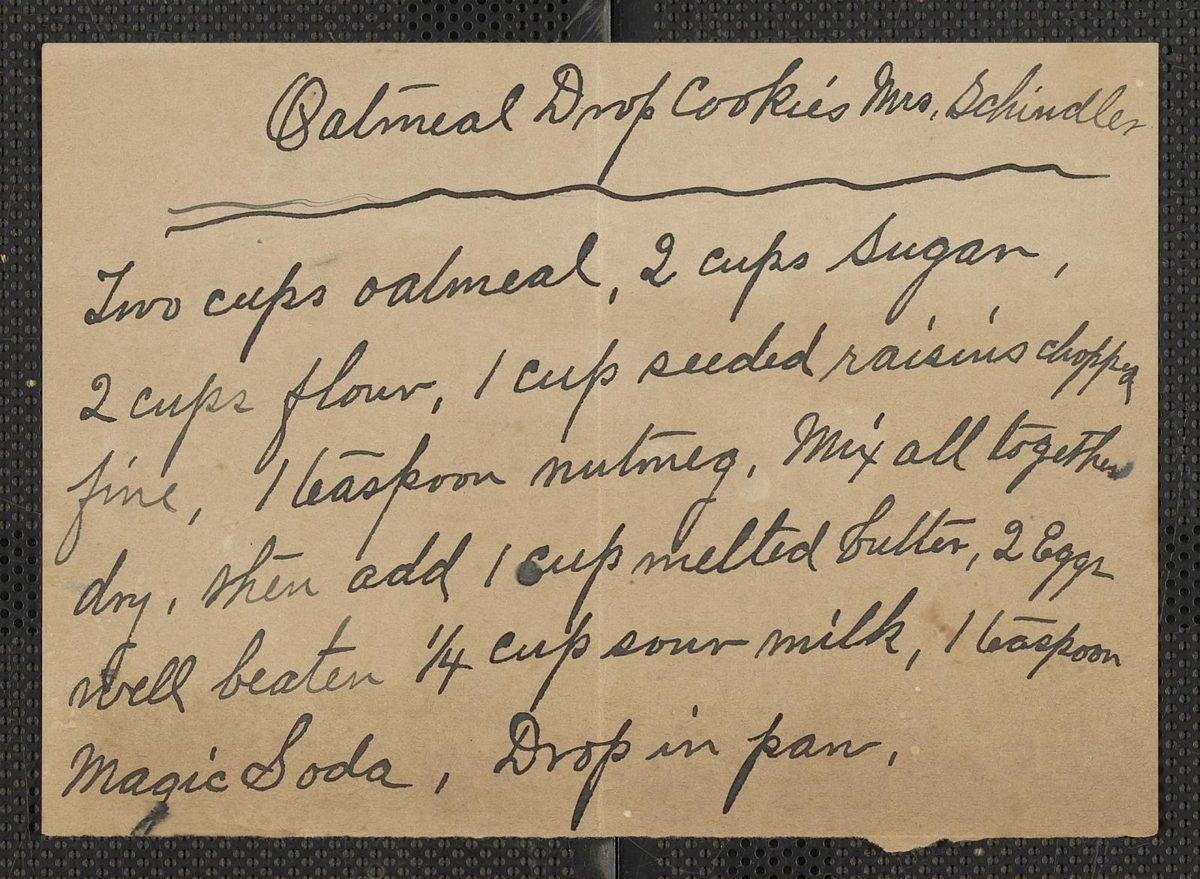
Step 3: Transcribe the handwriting
There are three realistic ways to turn handwriting into text. All of them work; they trade time for money.
Type them yourself (free, slowest)
You read every word closely, so you catch the odd abbreviations. For a few dozen cards this is entirely doable over a few evenings, especially if you split the cards among relatives.
Free text-recognition apps (free, mixed results)
Apps such as Google Lens can copy text from a photo. They do well on clear print and less well on old cursive, so expect to correct a fair amount.
AI transcription tools (fast, but you still check)
Newer AI models read cursive much better, and some tools are built specifically for recipe cards. They are not perfect, and the mistakes they make are the dangerous kind: small and plausible. Whatever you use, check these against the card:
- Fractions. “1½” read as “½” is the classic error, and it ruins a cake. We saw exactly this when testing on faint pencil notes.
- T vs t. Tablespoon and teaspoon abbreviations look almost identical in many hands.
- Oven instructions. Old cards say “moderate oven” or nothing at all. Add a modern temperature in a note rather than changing the original.
- Old ingredient names. Oleo, sour milk, brand names that no longer exist. Keep them, and explain them in a note.
A good rule: transcribe exactly first (old spellings included), then add a cleaned-up version or notes for modern cooks. Mark anything you can't read with [?] instead of guessing, and ask a relative.
Step 4: Organize the recipes
Pick one way to group the book and stick to it. Common choices:
- By course (breads, mains, desserts, preserves): easiest to cook from.
- By person (“Grandma Ruth's kitchen,” “Uncle Joe's barbecue”): best as a keepsake.
- By occasion (Thanksgiving, Christmas, birthdays): ideal if the book is a holiday gift.
This is also the moment to collect the stories. One or two sentences per recipe (“she made this every Easter and hid the recipe from the neighbors”) turns a recipe collection into a family history.
Step 5: Design the pages
The most loved family cookbooks share a simple layout:
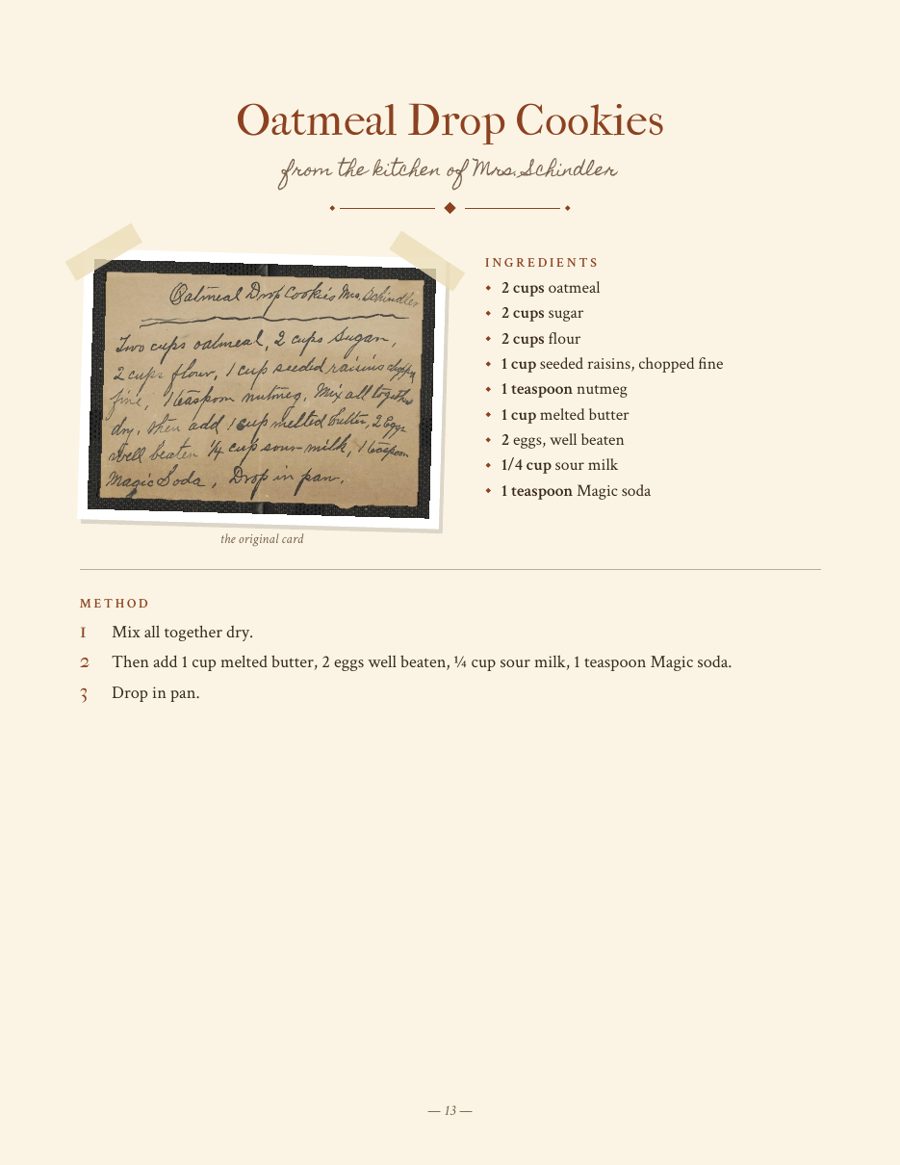
- a photo of the original card next to the typed recipe, so the handwriting is kept;
- ingredients and method clearly separated, in a readable font;
- a cover with the family name, a short dedication, and a contents page.
You can build this for free in Word, Google Docs or Canva: one recipe per page, the card photo at the top or side. It takes time, but you have complete control.
Step 6: Print and share
- At home: print on heavier paper and use a binder or sheet protectors, which handle kitchen splashes well.
- At a copy shop: FedEx Office, Staples and local print shops can print a PDF and bind it (spiral binding is common and lies flat on the counter). Call ahead for turnaround times.
- Print-on-demand books: online services such as Lulu or Blurb print bound books from a PDF and ship them. Check their current prices, size requirements and delivery times before you commit.
- Digital copies: email the PDF to relatives who live far away, so everyone has the recipes on their phone.
Holiday timeline
Thanksgiving 2026 is on Thursday, November 26. Working backwards: ask relatives for cards by early November, finish transcribing and checking about two weeks before, and leave a week for printing (more if a printed book has to be shipped). For Christmas, the same plan works if you start by late November.
Where CardToCookbook fits
We built CardToCookbook to do steps 3 to 6 for you. You upload phone photos of the cards, AI transcribes the handwriting, and you review each recipe next to its photo, with anything uncertain marked [?]. Then you pick a template (Vintage, Simple & modern or Holiday), add a family name and dedication, and download a print-ready PDF with the original card on every page. Your photos stay in your browser.
It is honest to say what it doesn't do: faint pencil can still be misread, which is why checking is built in, and it works best on English handwriting today. You can try 3 cards free (watermarked); a full book is a one-time $19 for up to 30 cards or $39 for up to 100, with no subscription. If you prefer the free route, everything in the steps above works just as well with a word processor.
Try 3 cards freeSee a sample book (PDF)
FAQ
How long does it take to make a family cookbook?
Gathering cards from relatives usually takes the longest. Typing a recipe by hand takes a few minutes per card; with AI transcription most of the time goes into checking. Leave extra days if you want printed copies before a holiday.
Can I include family photos and stories?
Yes. A short note under a recipe (who made it, when it was served) is often the part relatives like most. If you build the book in Word, Google Docs or Canva you can add photos anywhere.
What if a card is in another language?
Transcribe it in the original language first, then add a translation underneath. AI tools are usually most reliable on English handwriting, so check non-English cards especially carefully.
How many recipes make a good family cookbook?
There is no minimum. Even 15–20 well-loved recipes make a meaningful gift. Larger collections are easier to use with a contents page and sections.